Before sunrise, when the sky is still dim and the air carries a slight morning chill, women in the villages of Tajikistan are already awake, beginning their day in the quiet hours before light fully arrives.
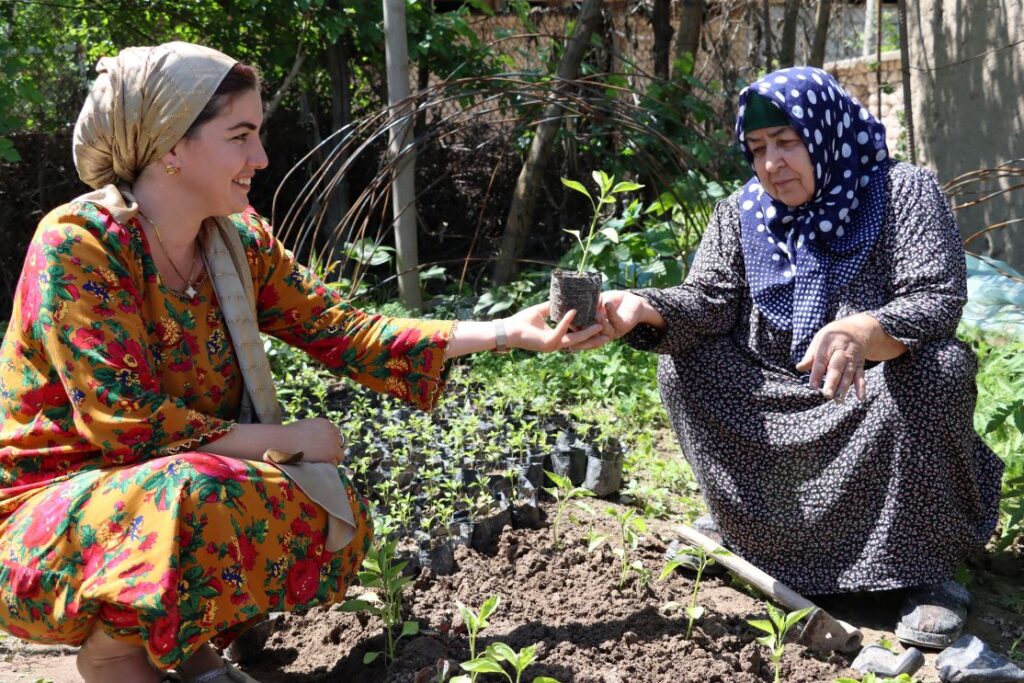
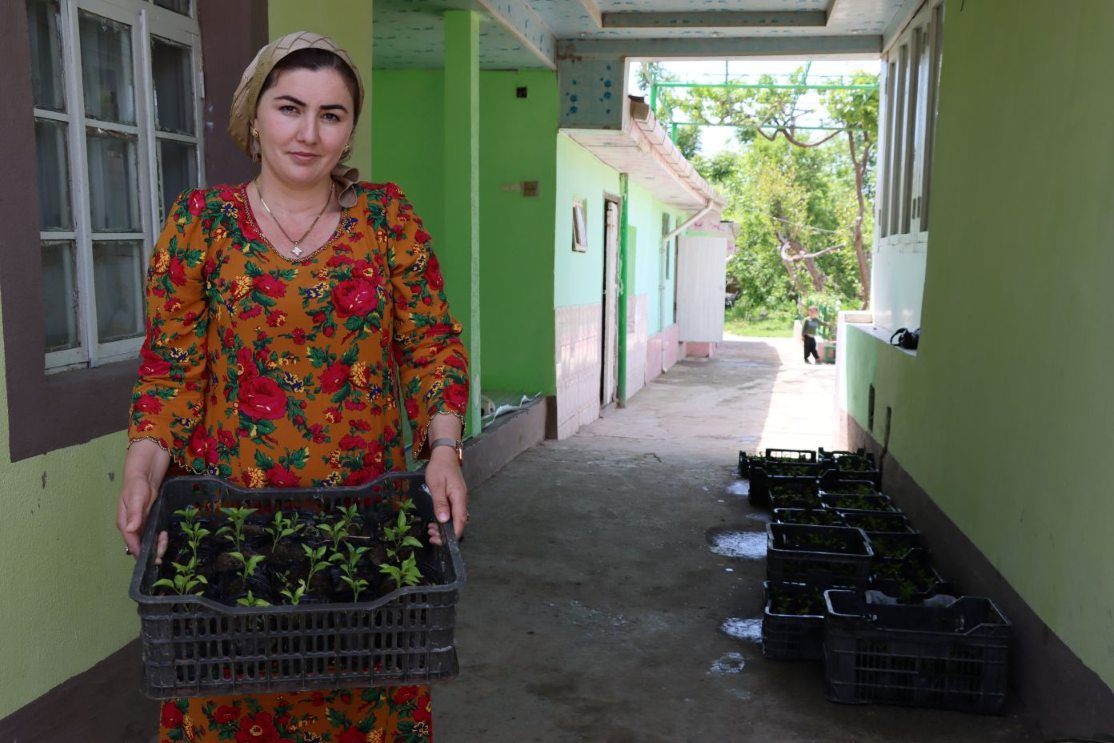
In the village of Shohbika in Vose district, about 170 kilometers south of Dushanbe, the morning begins before the sun fully rises. Shoira, a young mother of three, steps into her yard with small trays of tomato seedlings. This morning feels different. For years, her family bought seedlings at market, choosing what was available and hoping they would take root. This season, for the first time, she has prepared them herself, carefully growing them in trays at home using techniques she recently learned together with her mother-in-law.
Over recent months, 600 rural women across four districts of Khatlon have completed a comprehensive training programme designed to strengthen agricultural production, food safety, and household resilience.
The training programme was part of the World Food Programme Tajikistan Food Security Safety Net Activity, funded by the Government of the United States, and implemented with partners including Equidev. Under this initiative, the U.S. Government support helps strengthening the ability of families to produce, preserve, and safely use their own food. Through investment in community-based training and agricultural resilience, this partnership is directly supporting women in some of the country’s most vulnerable rural areas.
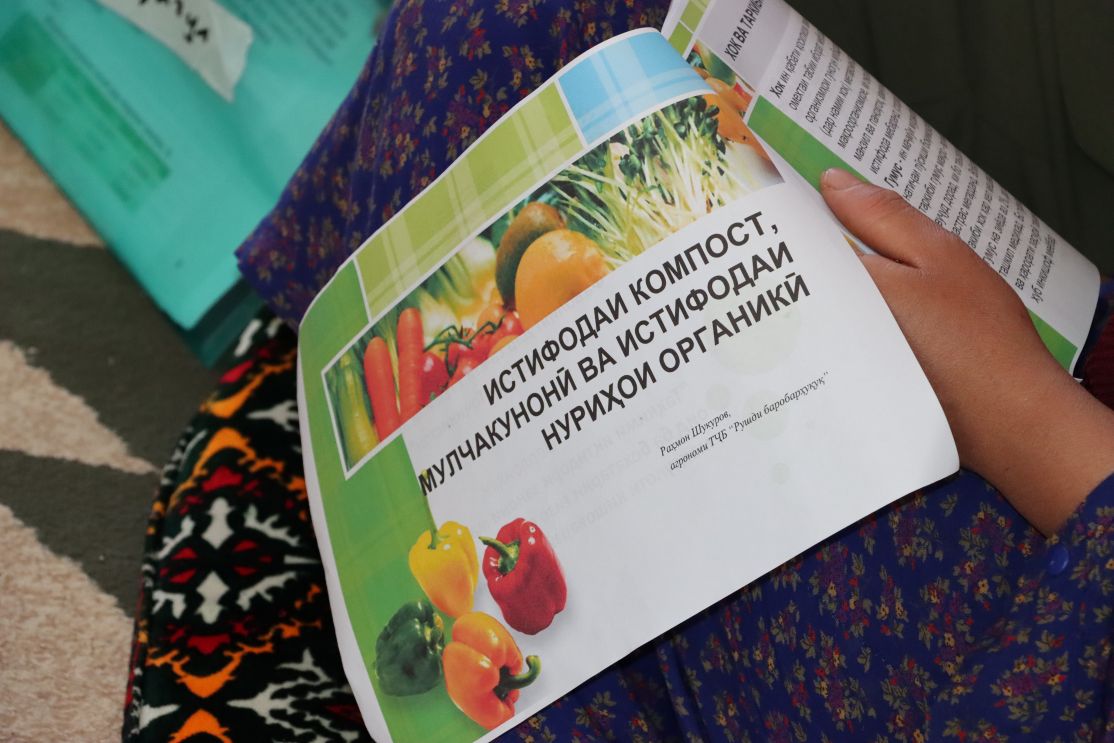
Learning to work differently
Just a couple of months earlier, Shoira sat among other women in a training session in her village, listening closely, asking questions, comparing what she had always done with what she was now being shown.
The ideas were not complicated, but they required a shift in thinking. Soil could be prepared differently. Seeds could be started earlier. A simple greenhouse, even a small one, could protect fragile plants and extend the growing season.
Women in Khatlon learned how to care for their soil, plan kitchen gardens, and protect crops using safer, low-cost methods.
“Before, we planted the way our parents did, without thinking much about timing or soil,” said Shoira. “Now I see that even small changes can give better results.”
“What we tried to do was show methods that women can use immediately at home,” explained Alisher Sharipov, a local agronomist and trainer. “Not only theoretical, but also practical, something they can test the next day.”
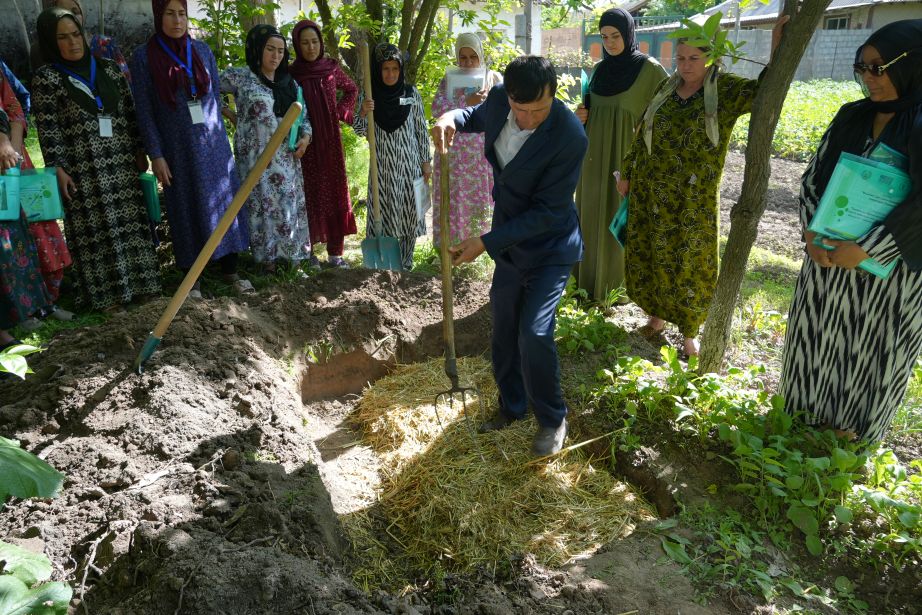
Across the villages, some of the biggest changes begin with what was once thrown away. Until recently, many families burned dry leaves and plant remains after the season. Now, women are learning to return that same material back to the soil.
“Before, we used to burn everything after harvest,” said Muhabbat, a participant from Khuroson district. “Now we dig it into the ground and make compost. The soil becomes softer, richer. You can see the difference with your own eyes.”
The shift is simple, but it changes how the land is treated, from something used season by season to something cared for over time.
From harvest to household
But the training did not stop in the field.
For most families, the real challenge begins after the harvest, how to keep food safe, how to store it long enough to last through the winter, and how to avoid losing what has already been grown.
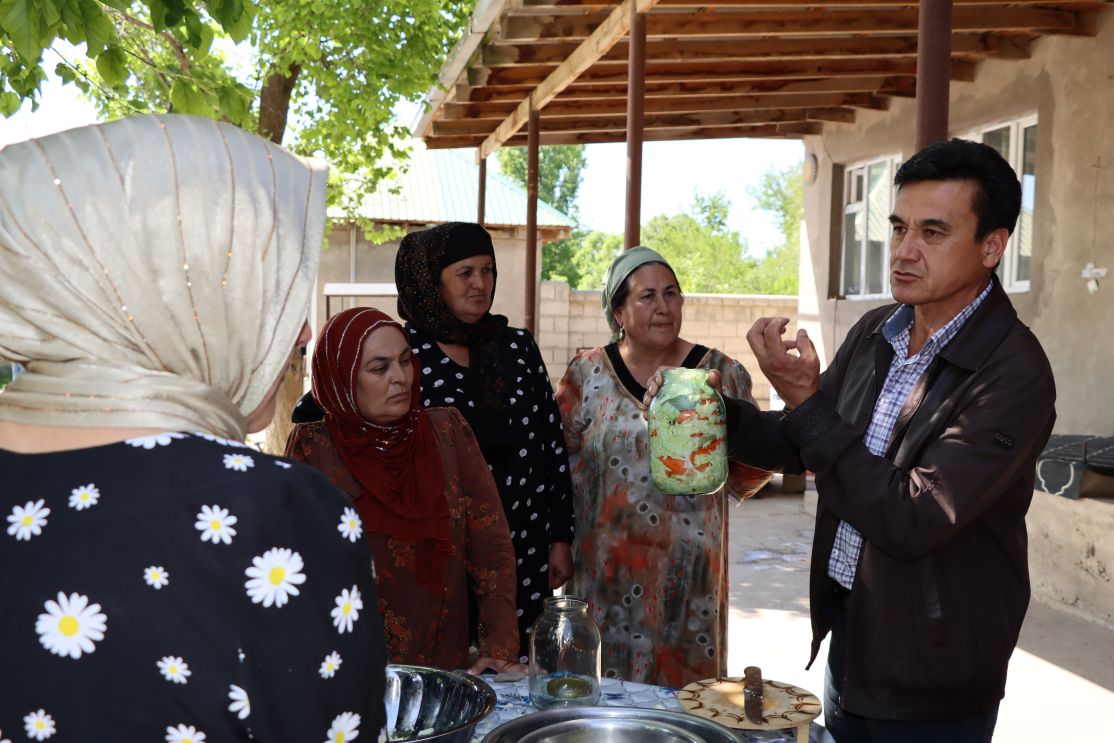
In shaded courtyards and simple training spaces, women gathered around tables lined with glass jars, fresh vegetables, and clean cloths. They learned how to sterilize properly, how to seal jars safely, and how to avoid risks that often go unnoticed.
“We used to lose so much without understanding why,” said Saida. “Now I see it was how we handled it after. Now, when my children eat what I prepare, I feel calm. I know I did everything correctly.”
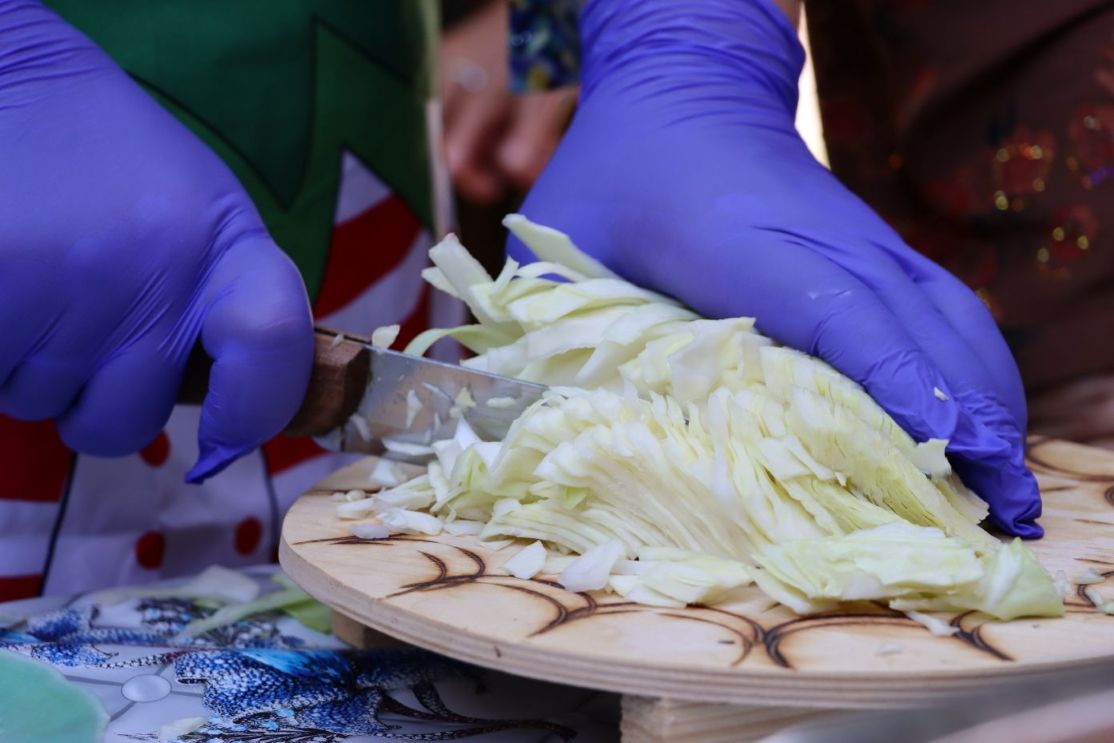
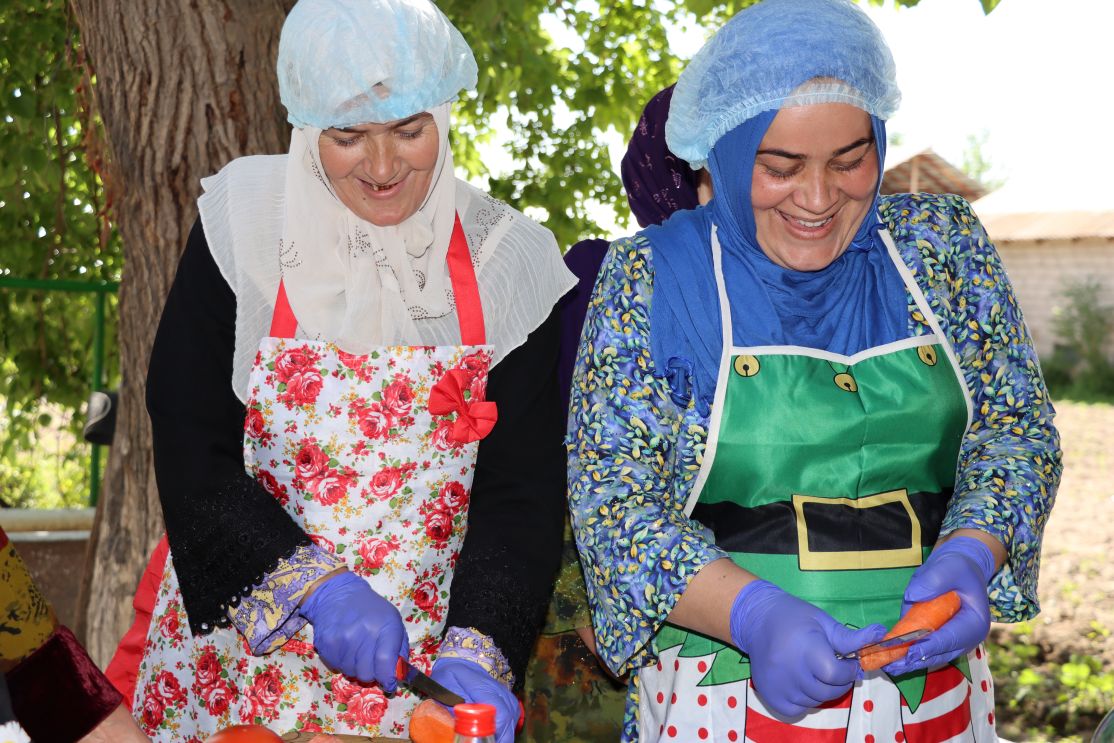
“Food safety is about small, correct steps, like clean jars, proper storage, careful handling,” said Umeda Rahimova, a food technology trainer from Khuroson. “Those small steps protect health, and sometimes even save lives.”
The lessons were careful and precise, but their meaning was deeply personal. Safer food meant fewer illnesses, less waste, and more stability for families.
Knowledge that travels
Back in her village, Shoira is not working alone for long. Later that same day, a neighbor leans over the low wall, watching her arrange the seedlings in straight lines. They begin to talk about spacing, about watering, about whether the plastic covering will hold heat at night.
“When one woman learns, she doesn’t keep it to herself,” said Momajon, Shoira’s mother-in-law, who brought both of her daughters-in-law to the trainings. “We share it with neighbors, with relatives.”
By the next week, another household begins to try something similar.
What 600 women can mean
Six hundred women trained is, on paper, a number. In reality, it is something far more tangible.
It means more vegetables growing in small household plots, less food lost after the harvest, and safer preservation practices becoming part of everyday routines. It means that some families are beginning to earn modest incomes from surplus produce, turning what was once only for consumption into something that can also support the household.
By placing women at the centre of this work, the programme supports both immediate food needs and longer-term stability across communities.
“Now I feel like I can do more for my family,” Rukhshona says quietly, brushing soil from her hands. “Not just cook, but really take care of what we eat and how we live.”
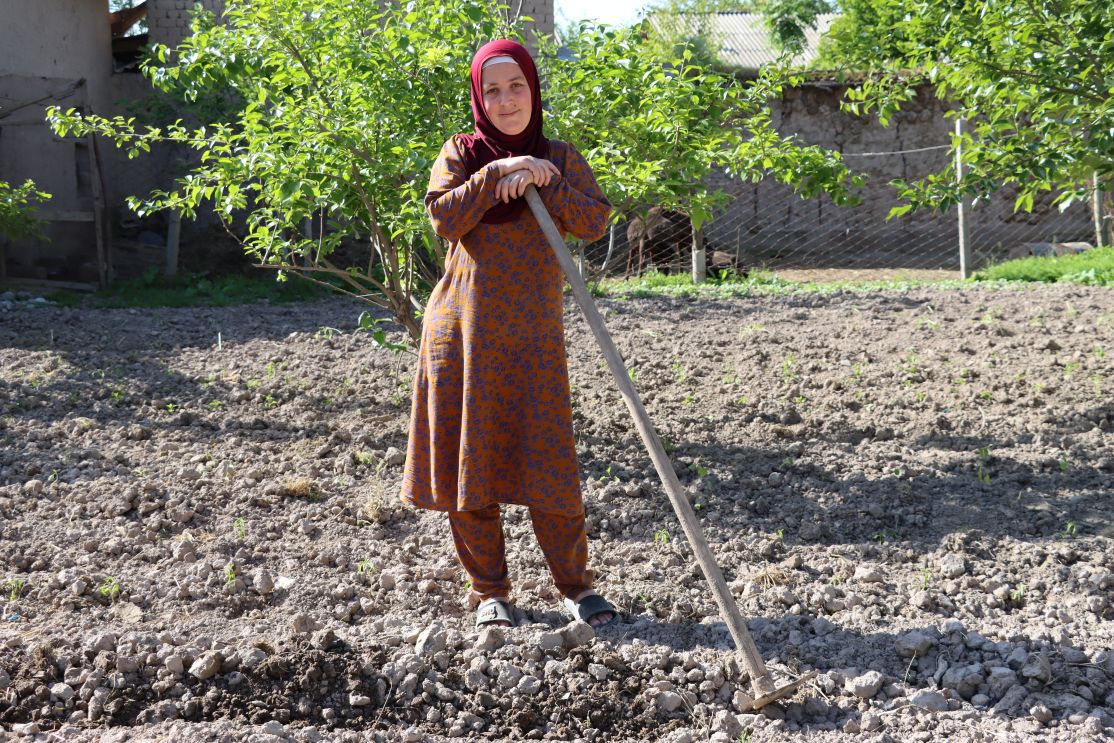
Across Khatlon, hundreds of women are doing the same, reshaping, in steady and practical ways, how food is grown, preserved, and shared within their homes.